

Why You Should Care About Fiber:
Protein has had its turn (and should still be a MAJOR dietary focus for anyone trying to lose weight or improve their health), but fiber is having a moment right now and I am here for it. Although we mostly think of it as a tool for healthy stool, fiber quietly influences nearly every major system in the body2. Blood sugar regulation, cholesterol metabolism, weight management, and gut health all hinge, at least in part, on adequate fiber intake.
Despite decades of research, most adults still fall short of recommended fiber intake, averaging roughly half of what’s suggested3. This gap has meaningful consequences for metabolic health, cardiovascular risk, and the gut microbiome.
This post breaks down what fiber is, the different types, and—most importantly—why it matters.
What Is Dietary Fiber?
Dietary fiber, found in carbohydrates, are components of plant foods that resist digestion in the small intestine. Instead of being broken down into glucose, fiber travels intact to the colon, where it exerts local effects on digestion/nutrient absorption and becomes fuel for gut microbes.
Fiber is broadly categorized into two functional types: soluble and insoluble8. Most whole plant foods contain a mix of both, but understanding their distinct roles helps explain fiber’s wide-ranging benefits.
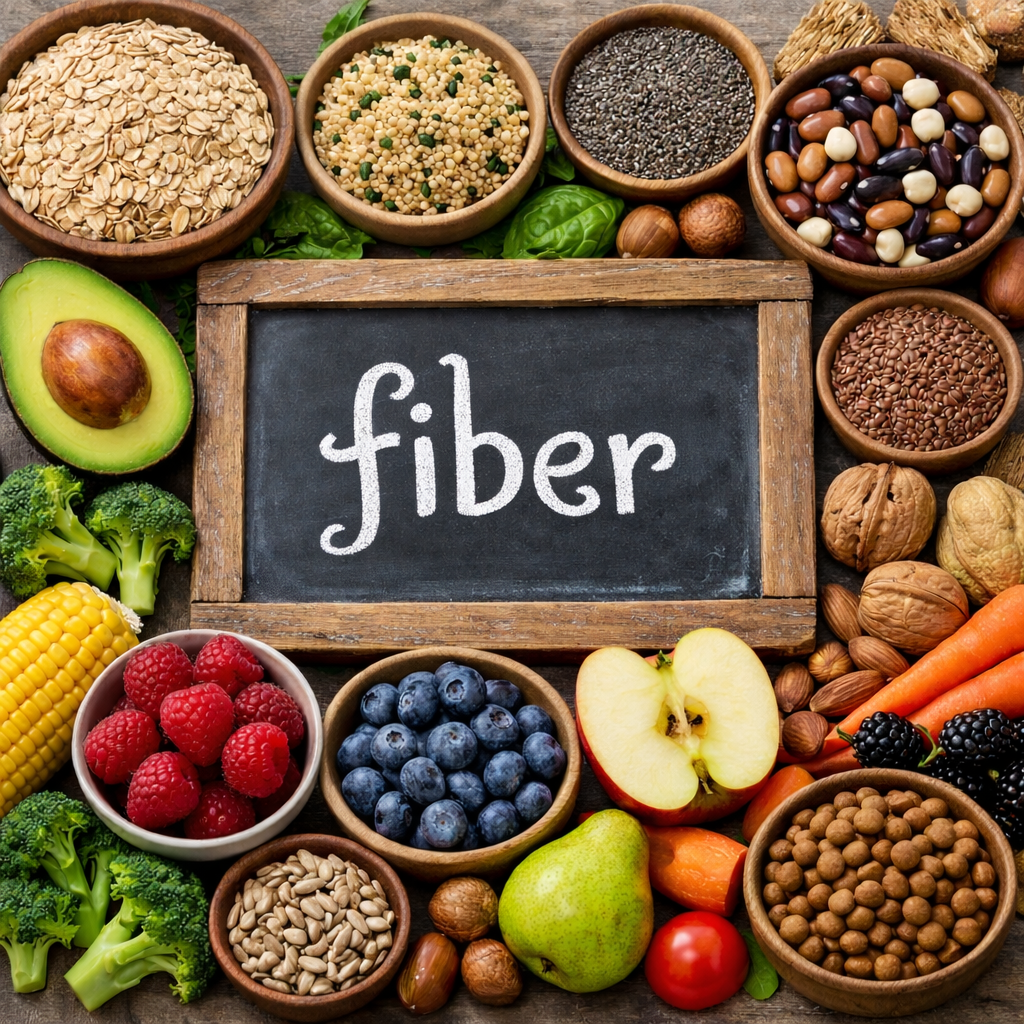
Soluble vs. Insoluble Fiber: Different Jobs, Same Team
Soluble fiber dissolves in water and forms a viscous, gel-like substance in the gut. This property slows digestion and nutrient absorption, particularly carbohydrates and fats. Soluble fibers are also highly fermentable, meaning they are readily used by gut bacteria (which is why they can create gas and distension in some individuals).
Common sources include oats, barley, chia seeds, flaxseed, legumes, apples, citrus fruits, and berries.
Insoluble fiber, on the other hand, does not dissolve in water. It adds bulk to stool and supports intestinal motility, helping move waste efficiently through the digestive tract.
Sources include leafy greens, cruciferous vegetables, nuts, seeds, and the fibrous components of whole grains.
Both types are essential. Soluble fiber plays a larger role in metabolic regulation, while insoluble fiber is critical for bowel regularity and structural gut health.
Fiber and Blood Sugar Regulation
One of fiber’s most clinically relevant roles is its effect on blood glucose control1, 11. Soluble fiber slows gastric emptying and carbohydrate absorption, resulting in a more gradual rise in post-meal blood sugar levels.
When regularly consumed in adequate amounts, fiber intake has been associated with:
- Reduced post-meal glucose spikes (which reduces crashes)
- Improved insulin sensitivity
- Lower fasting blood glucose and HbA1c in individuals with insulin resistance or type 2 diabetes.
Fiber also influences the secretion of incretin hormones such as GLP-1, which enhance insulin release and sends signals the feeling of fullness to the brain (satiety). This makes fiber intake particularly valuable for individuals with prediabetes, type 2 diabetes, and PCOS.
Adding fiber-rich foods to meals buffers glucose response and improves metabolic resilience – a key reason whole food, nutrient-rich carbohydrates are a cornerstone of blood sugar and weight management, not something to eliminate.
Fiber and Cholesterol Metabolism
Soluble fiber has a well-established cholesterol-lowering effect, particularly on LDL cholesterol7,10. The primary mechanism involves binding bile acids in the intestine.
Bile acids are made from cholesterol and are normally reabsorbed. When soluble fiber binds them, they are excreted through stool instead. To compensate, the liver pulls more cholesterol from circulation to make new bile acids, lowering blood LDL levels. Fibers shown to be especially effective include beta-glucan (from oats and barley), psyllium (think Metamucil), and pectin from fruits.
The combined mechanisms on blood glucose control and cholesterol excretion help explain why diets higher in fiber are consistently associated with reduced cardiovascular risk.
Fiber, Satiety, and Weight Regulation
Fiber supports weight management not by restriction, but by enhancing fullness and appetite regulation7,9
High-fiber meals:
- Increase gastric distension
- Slow stomach emptying
- Reduce hunger between meals
- Support satiety hormones such as GLP-1 and PYY
These effects can reduce overall energy intake without conscious calorie tracking. Additionally, stable blood sugar levels supported by fiber reduce cravings and reactive hunger, making long-term adherence to healthy eating patterns more achievable.
Notably, fiber intake is more strongly associated with weight maintenance than short-term weight loss, highlighting its role in sustainability rather than quick fixes.

Fiber and the Gut Microbiome
Perhaps fiber’s most profound effects occur at the microbial level4,6
Many fibers function as prebiotics, meaning they selectively feed beneficial gut bacteria. When these microbes ferment fiber, they produce anti-inflammatory short-chain fatty acids (SCFAs) such as butyrate, acetate, and propionate.
SCFAs:
- Support the integrity of the gut barrier
- Regulate immune function
- Reduce intestinal and systemic inflammation
- Influence insulin sensitivity and lipid metabolism
A low-fiber diet effectively starves the microbiome, reducing microbial diversity and SCFA production, leading to a host of down-stream intestinal and systemic health consequences, including an increased risk of colon cancer5. Conversely, a diet rich in diverse plant fibers supports a more resilient, metabolically supportive gut ecosystem.
How Much Fiber Do We Need?
Current guidelines generally recommend:
~25 grams per day for adult women
~38 grams per day for adult men
However, optimal intake likely varies based on metabolic health, microbiome composition, and overall dietary pattern. Diets high in fiber can be tricky for certain individuals with IBS, SIBO, and other dysbiotic conditions – so working with a knowledgeable practitioner is key.
Equally important is how fiber intake is increased. Rapid increases can lead to bloating, discomfort, or even diarrhea – particularly in individuals with dysbiosis or impaired gut motility. Gradual increases, adequate hydration, and variety across fiber sources are key.
The Bottom Line
Fiber is not a single nutrient with a single function—it is a foundational component of metabolic, cardiovascular, and gut health.
By improving blood sugar regulation, lowering cholesterol, supporting satiety, and feeding the gut microbiome, fiber acts as a central hub connecting diet to long-term health outcomes.
Rather than focusing on elimination or restriction, increasing fiber intake is one of the most accessible, evidence-based strategies to support whole-body health.
When in doubt, add plants—and add them consistently.

References
- Abutair, A. S., Naser, I. A., & Hamed, A. T. (2016). Soluble fibers from psyllium improve glycemic response and body weight among diabetes type 2 patients. Nutrition Journal, 15(1), 86. https://doi.org/10.1186/s12937-016-0207-4
- Anderson, J. W., Baird, P., Davis, R. H., Ferreri, S., Knudtson, M., Koraym, A., Waters, V., & Williams, C. L. (2009). Health benefits of dietary fiber. Nutrition Reviews, 67(4), 188–205. https://doi.org/10.1111/j.1753-4887.2009.00189.x
- ASN Staff. (2021, June 9). Most americans are not getting enough fiber in our diets. American Society for Nutrition. https://nutrition.org/most-americans-are-not-getting-enough-fiber-in-our-diets/
- Deehan, E. C., & Walter, J. (2016). The fiber gap and the disappearing gut microbiome: Implications for human nutrition. Trends in Endocrinology & Metabolism, 27(5), 239–242. DOI: 1016/j.tem.2016.03.001
- Kunzmann, A., Coleman, H., Huang, W., Kitahara, C., Cantwell, M., & Berndt, S. (2015). Dietary fiber intake and risk of colorectal cancer and incident and recurrent adenoma in the prostate, lung, colorectal, and ovarian cancer screening trial. The American Journal of Clinical Nutrition, 102(4). doi: 3945/ajcn.115.113282
- Makki, K., Deehan, E. C., Walter, J., & Bäckhed, F. (2018). The impact of dietary fiber on gut microbiota in host health and disease. Cell Host & Microbe, 23(6), 705–715. https://doi.org/10.1016/j.chom.2018.05.012
- Reynolds, A., Mann, J., Cummings, J., Winter, N., Mete, E., & Te Morenga, L. (2019). Carbohydrate quality and human health: A series of systematic reviews and meta-analyses. The Lancet, 393(10170), 434–445. https://doi.org/10.1016/S0140-6736(18)31809-9
- Slavin, J. L. (2013). Fiber and prebiotics: Mechanisms and health benefits. Nutrients, 5(4), 1417–1435. https://doi.org/10.3390/nu5041417
- Slavin, J. L., & Green, H. (2007). Dietary fibre and satiety. Nutrition Bulletin, 32(Suppl 1), 32–42. https://doi.org/10.1111/j.1467-3010.2007.00603.x
- Whitehead, A., Beck, E. J., Tosh, S., & Wolever, T. M. S. (2014). Cholesterol-lowering effects of oat β-glucan: A meta-analysis of randomized controlled trials. American Journal of Clinical Nutrition, 100(6), 1413–1421. https://doi.org/10.3945/ajcn.114.086108
- Xie, Y., Gou, L., Peng, M., Zheng, J., & Chen, L. (2021). Effect of soluble fiber supplementation on glycemic control in adults with type 2 diabetes mellitus: A systematic review and meta-analysis. Clinical Nutrition, 40(4), 1800-1810.